

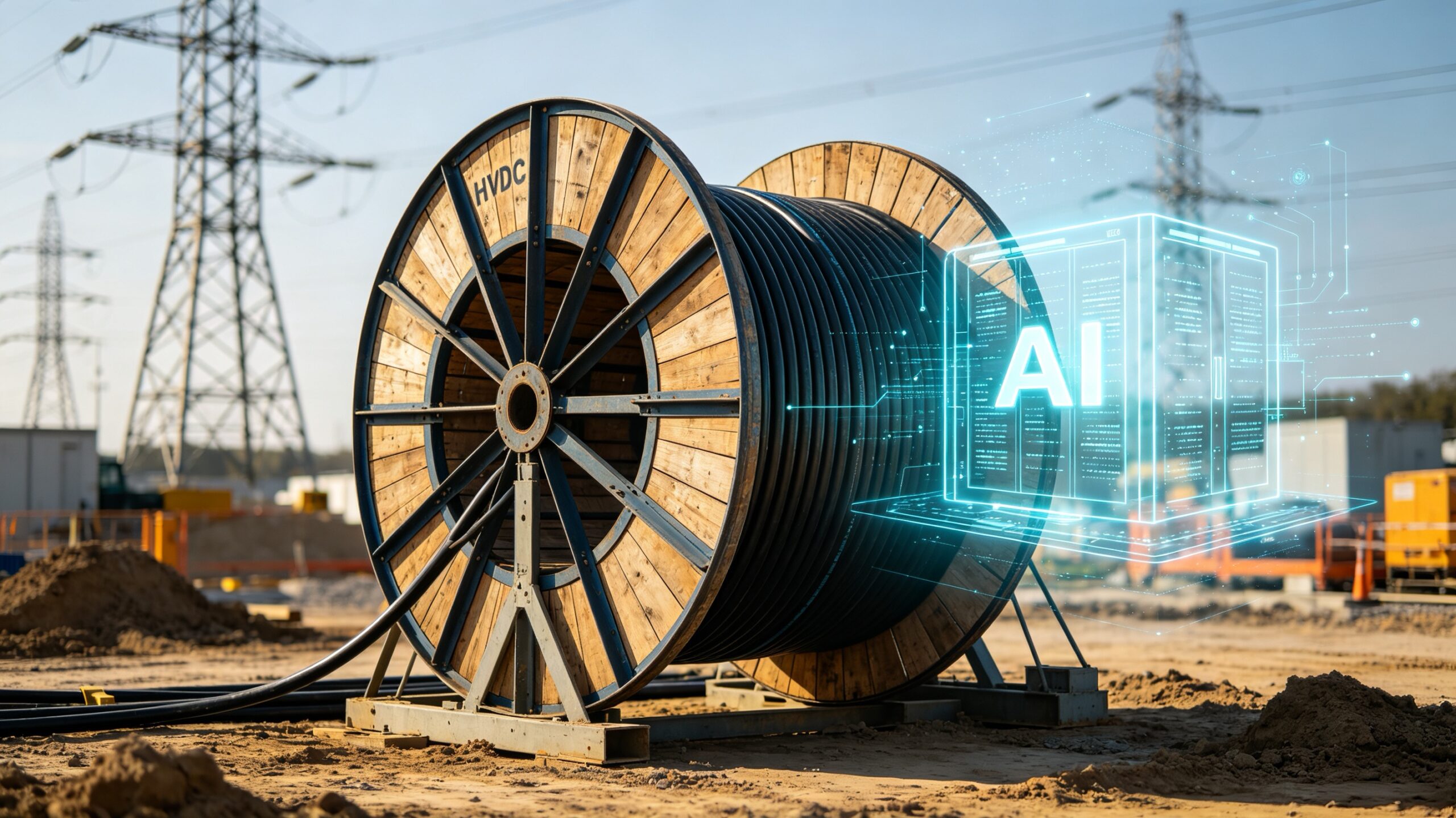
The rapid build-out of AI infrastructure worldwide is creating unprecedented demand for power across the tech sector. In 2026, major cloud operators including Google, Amazon AWS and Meta keep rolling out large-scale next-generation AI data centers, reshaping power consumption and transmission requirements globally.
Traditional internet data centers operate on relatively modest power loads, but modern AI computing clusters push power density to entirely new levels. Conventional AC power transmission struggles to deliver ultra-high power over long distances while maintaining stable green power supply. This makes long-distance high-voltage direct current (HVDC) cables essential infrastructure for new AI data center deployments around the world.
The Core Reason: AI Data Centers Require Massive, Stable Power
Standard data center racks typically run between 5kW and 20kW. Next-generation AI training and GPU computing racks, however, are engineered to support power levels ranging from 500kW up to 1MW per rack.
These extreme power requirements create two key challenges:
- Alternating current (AC) transmission suffers significant energy losses over long distances.
- Local grids in many computing hubs often cannot handle sudden spikes in power draw from large AI clusters.
To address this, tech firms increasingly site data centers close to wind and solar generation assets. Long-distance HVDC transmission cables offer an efficient way to carry large volumes of clean power to computing parks, while keeping energy losses low.
This shift is driving a sharp rise in global demand for HVDC cables throughout 2026 and 2027.
Global HVDC Market Pattern: Market Access Barriers Are Falling
For decades, the premium long-distance HVDC cable market was dominated by European manufacturers such as Prysmian, Nexans and NKT. These firms built deep advantages in insulation material formulation, system certification and ultra-high voltage project delivery, creating substantial technical barriers to entry.
That said, the boom in energy and AI infrastructure is reshaping competitive dynamics in the sector.
In recent years, South Korean cable makers have broken long-standing market access barriers for high-end HVDC projects and secured major grid and energy transmission contracts across Europe. At the same time, cable manufacturers across Asia continue advancing their UHVDC cable technology, certification portfolios and production capacity.
As we move through 2026, the HVDC market enters a new phase:
- Historical European technical barriers gradually ease
- Competition opens up, bringing more diversified supply options
- Global EPC contractors and power investors are actively sourcing more stable, cost-competitive alternative suppliers
2026 Industry Trend: HVDC Becomes Standard Infrastructure for AI & Green Energy
The direction of travel in the industry is clear: Most large-scale AI base developments will pair with supporting long-distance DC transmission infrastructure. The combination of renewable energy, HVDC transmission and AI data centers is emerging as the dominant model across North America, Europe and Southeast Asia.
This means global demand for high-performance, long-distance high-voltage DC cables is set to sustain strong growth over the next 3–5 years.
Conclusion
Fueled by expanding AI compute capacity and the global push for clean energy, HVDC cables have become core strategic infrastructure supporting both the digital economy and the energy transition.
With historic market-access barriers receding, buyers for large-scale power transmission and data center projects now have access to a wider pool of reliable, cost-competitive cable suppliers.
Yunei Cable keeps advancing power cable R&D and manufacturing, delivering reliable transmission and DC distribution cable solutions for global energy and AI infrastructure projects.